Quick answer: To book a ferry to France with a car, start with the shortest crossing, Dover to Calais on Direct Ferries, where one search compares Irish Ferries, P&O Ferries and DFDS. Enter your car’s real length and height, add any pets, and check passports and number plates before you go.
Driving onto a ferry is easy once you’ve done it, but the first booking raises a lot of small questions. Which port? What size is my car? Do I need a sticker? What happens with the dog? This guide walks you through it in the order you’ll meet each question.
We focus on Dover to Calais because it’s the shortest crossing and one of the busiest, then point you to other routes if Kent is out of your way. The route facts come from Direct Ferries’ own route pages and the operators’ websites, and the travel rules come from gov.uk, all checked in November 2026.
Timetables and rules change, so check the details again when you book. You’ll find more trip planning help in our travel guides.
- Choose your route and operator. Short crossing from Kent, or a longer one from the south coast.
- Book with the right details. Car size, passengers, pets and a fare type that suits your plans.
- Get your documents and car ready. Passport dates, UK sticker, log book and insurance.
- Arrive in time and board. Check-in, border checks and what to do with your pet.
Step 1: Which ferry route to France should you choose?
Pick the crossing that starts closest to you and lands closest to where you’re going. For many drivers in London and the South East, that’s Dover to Calais.
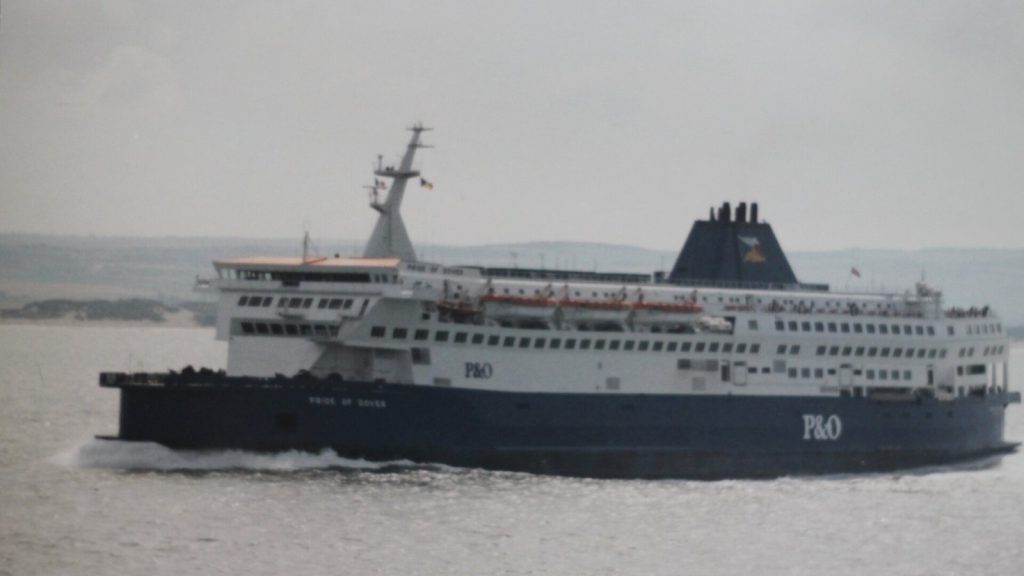
Direct Ferries lists three operators on Dover to Calais: Irish Ferries, P&O Ferries and DFDS Seaways. The crossing takes about an hour and a half, and there are sailings through the day and night. That choice is useful if your plans change, because another sailing is rarely far away.
If you live further west, a longer crossing can save hours of motorway driving. These are the main alternatives on Direct Ferries, with crossing times from its route pages:
| Route | Operator | Crossing time | Good for |
|---|---|---|---|
| Dover to Calais | Irish Ferries, P&O Ferries, DFDS | About 1 hour 30 minutes | The shortest sea crossing, lots of sailings |
| Newhaven to Dieppe | DFDS | About 4 hours | Sussex drivers heading for Normandy or Paris |
| Portsmouth to Caen | Brittany Ferries | About 6 hours | Hampshire and the west, Normandy beaches |
If you’d rather stay in your car for the whole trip, the train shuttle from Folkestone is the other option. Our ferry vs Eurotunnel comparison sets the two side by side, and our guide to UK ferry routes covers Ireland, Spain and the islands too.
Step 2: What details do you need when you book?
You need your travel dates, the number of passengers, your vehicle’s size and any pets. Get these right first time, because a wrong vehicle size can cause problems at the port.
- Vehicle type and size. Measure the length and height of your car with anything you add to it, such as a roof box or a bike rack on the back. Direct Ferries advises checking vehicle limits, which vary by operator.
- Passengers. Enter everyone who’s travelling. Direct Ferries’ Dover to Calais page says the car fare on this route stays the same however many people you bring, which helps if you travel as a family or a group.
- Pets. Add them to the booking. Each operator has its own pet rules (Step 4).
- Fare type. Some fares allow changes or cancellations and some don’t. If your dates might move, read the fare rules before you pay.
Search on the Direct Ferries Dover to Calais page and you’ll see the available sailings for your date from all three operators. Booking early gives you a wider choice of times, which matters most in school holidays.
After you book, Direct Ferries emails a confirmation. How you get your boarding pass depends on the operator: some issue it at booking and others check you in at the port. Its help centre explains check-in and tickets in more detail.
Compare Dover to Calais sailings on Direct Ferries
Step 3: What documents and car checks do you need?
You need a valid passport for everyone, your driving licence, your car’s log book and insurance details, and in some cases a UK sticker. Check each one a few weeks before you travel, so there’s time to fix a problem.
Is your passport valid for France?
For France, gov.uk says your passport must have been issued less than 10 years before the day you arrive, and must be valid for at least 3 months after the day you plan to leave the Schengen area. Check both dates for every passenger, children included.
You can stay up to 90 days in any 180-day period without a visa. Read the full France entry requirements on gov.uk.
The EU’s Entry/Exit System (EES) now registers fingerprints and a photo the first time you enter. Gov.uk says that when you leave from Dover, your details are taken at the border before you leave the UK, and that EES may mean longer waits. Build that into your timing.
What do you need for the car?
- Licence, log book and insurance. Gov.uk’s driving abroad guidance says to take your driving licence, your log book (V5C) and your insurance certificate. For a car hired or leased in the UK, you need a VE103 certificate instead of the log book. Ask your insurer whether your cover works in France.
- UK sticker. You don’t need one if your number plate shows the UK identifier with the Union flag. Old GB stickers are no longer valid, so cover or remove them. Gov.uk’s number plate and sticker rules explain which plates count.
- Passenger details. Some operators ask for passport details for everyone before you travel. DFDS, for example, says Advance Passenger Information is mandatory when you travel to and from the UK. Fill it in when the operator asks.
Step 4: What happens at Dover on the day?
You drive to the port, check in at a booth, go through the border checks, then queue in a lane until it’s time to drive on. Leave plenty of time, because the border checks can take a while at busy times.
P&O Ferries says check-in for Dover to Calais closes 60 minutes before departure with a vehicle, and 90 minutes before if you travel with pets or as a foot passenger. DFDS also closes check-in 60 minutes before departure, and in high season it advises allowing 120 minutes before check-in closes to get through all the controls. See P&O’s travel information for its current times.
Once you’re on board, you leave the car on the vehicle deck and go up to the passenger decks. You can’t go back to your car until the ship has docked. Take what you need for the crossing, such as snacks, a coat and chargers, before you lock up.
Remember that France is one hour ahead of the UK. A crossing that leaves Dover at noon lands in Calais at about 2.30pm local time.
Can you take your dog on the ferry to France?
Yes. All three Dover to Calais operators take pets, but your pet needs the right paperwork and usually stays in the car during the crossing.
Gov.uk’s pet travel rules say your dog, cat or ferret needs a microchip, a rabies vaccination at least 21 days before travel and an animal health certificate (AHC) from your vet.
The AHC is valid for 10 days for entry into the EU, and you need a new one for each trip. Pet passports issued in Great Britain can’t be used to enter the EU.
Coming home, a vet must give your dog tapeworm treatment between 24 hours and 5 days before you arrive back in Great Britain. Ask your vet to plan the timings with you.
On board, the rules differ by operator. Direct Ferries’ route page says P&O keeps pets in your vehicle, with a pet lounge for dogs at an extra charge.
DFDS keeps pets in the vehicle, and you can ask Guest Services about visiting them during the crossing. Irish Ferries keeps pets in your vehicle or in its pet den. Choose the operator that suits your pet when you book.
Key takeaways
- Dover to Calais takes about an hour and a half, with Irish Ferries, P&O Ferries and DFDS all on the route.
- Measure your car with roof boxes and bike racks fitted, and book that size.
- Your passport must be under 10 years old on arrival and valid 3 months after you leave the Schengen area.
- No UK sticker is needed if your plate has the UK identifier and Union flag.
- Check-in for cars at Dover closes 60 minutes before departure, or 90 minutes with pets on P&O.
- Pets need a microchip, rabies jab, AHC and, for dogs coming home, a tapeworm treatment.
Frequently asked questions
How early should I get to Dover for a ferry?
Arrive well before check-in closes. P&O and DFDS close car check-in 60 minutes before departure, and P&O closes it 90 minutes before for pets. DFDS suggests allowing an extra 120 minutes before check-in closes in high season, because border checks happen at Dover before you board and can take time.
Can I stay in my car on the ferry to Calais?
No. On the ferry, everyone leaves their vehicle once it’s parked and goes up to the passenger decks, and you can’t return until the ship docks. If you’d like to stay with your car, the train shuttle from Folkestone lets you remain in your vehicle, which our ferry vs Eurotunnel comparison explains.
Do I need a UK sticker to drive in France?
Not if your number plate shows the UK identifier with the Union flag. If it doesn’t, you need a UK sticker on the car, but not on the number plate itself. Old GB stickers are no longer valid, so gov.uk says to cover or remove them.
Can I book a ferry with a roof box or bike rack?
Yes, but include them in your vehicle size. Measure the total height with the roof box on, and the total length with the bike rack fitted, then choose the matching vehicle option when you book. Operators set their own limits, so a car that’s too tall or long for its booking can cause problems at check-in.
Can I take a cabin on the Dover to Calais ferry?
No. Direct Ferries says none of the three Dover to Calais operators offer private cabins. You get seats in the passenger lounges and outside decks, and you can pay extra for a quieter premium lounge.
If you want a cabin to sleep in, look at a longer overnight route from Portsmouth or Plymouth instead.
What else do I need to drive in France?
Check whether you need a pollution sticker. Gov.uk says all vehicles driving in central Paris, Lyon and Grenoble must display one from 8am to 8pm, Monday to Friday, and some older vehicles don’t qualify at all. For other rules of the road, gov.uk points you to the RAC’s guide to driving in France.