Quick answer: Choose LeShuttle (Eurotunnel) from Folkestone if you want the fastest crossing and to keep your dog beside you in the car. Choose a Dover to Calais ferry if you’d like to stretch your legs, eat on board, travel on foot or pick from three operators. Both take your car to Calais, and Direct Ferries sells both.
Ferry vs Eurotunnel is usually the first decision when you drive to France. Both crossings start in Kent and arrive in Calais, yet they feel very different.
One is a 35-minute train ride in your own car. The other is a short sea voyage with decks, cafés and shops.
We compared the two on crossing time, check-in, what you do during the crossing, pets, families and route choice. We used Direct Ferries’ route pages, LeShuttle’s own website and the P&O Ferries and DFDS websites, all checked in November 2026.
We haven’t compared fares, because they change by date and demand, so search your own dates for the current prices. You’ll find more trip planning help in our travel guides.
How do the ferry and Eurotunnel compare?
LeShuttle wins on speed and on keeping you with your car. The ferry wins on space, food and choice of routes.
| Factor | Ferry (Dover to Calais) | LeShuttle (Folkestone to Calais) |
|---|---|---|
| Crossing time | About 1 hour 30 minutes | 35 minutes |
| Operators | Irish Ferries, P&O Ferries, DFDS | LeShuttle only |
| When to arrive | Car check-in closes 60 minutes before departure (P&O and DFDS) | No more than 2 hours and no less than 1 hour before departure |
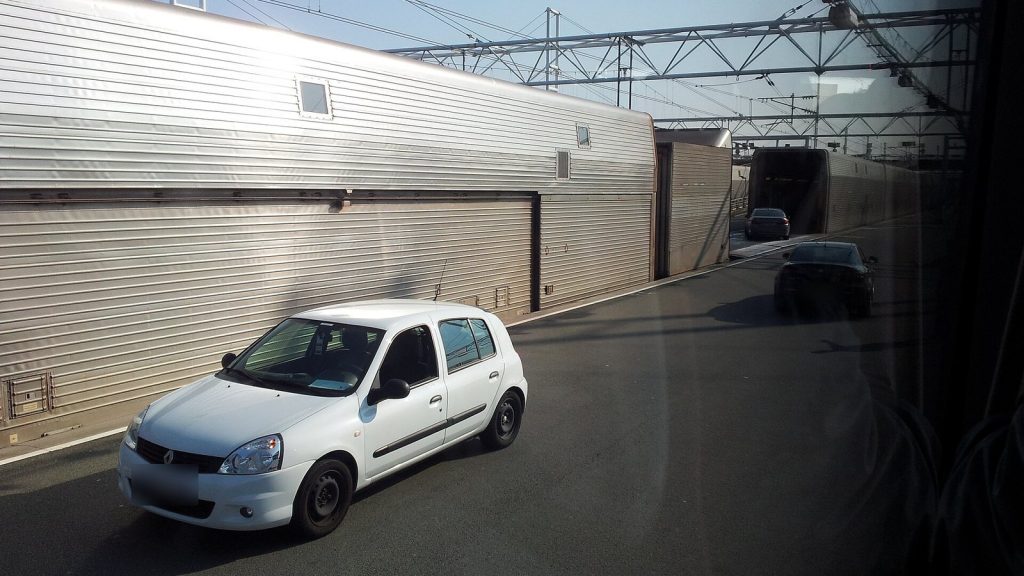
| During the crossing | You leave the car and go up to the passenger decks | You stay with your car and can get out to stretch your legs |
| Pets | Usually stay in the vehicle without you. P&O has a pet lounge for dogs, Irish Ferries a pet den | Stay with you in the car. Pet Reception check-in at least 90 minutes before |
| On board | Cafés, restaurants, shops, outside decks | Your own car. Shops and food are in the terminals |
| Who the ticket covers | Direct Ferries says the car fare on this route stays the same however many people travel | Up to 9 people per vehicle, per LeShuttle |
| Foot passengers | Yes, with P&O Ferries. DFDS takes no foot passengers on its Dover routes | Built for vehicles: you drive on and drive off |
| Other routes | Many, from Dover, Newhaven, Portsmouth, Poole and Plymouth | One route, Folkestone to Calais |
| Choose it if | You want a break from the car, food on board or to travel on foot | You want the shortest crossing and to stay with your pet |
Which is quicker, the ferry or the Eurotunnel?
LeShuttle is quicker. The train takes 35 minutes from Folkestone to Calais, while Direct Ferries puts the Dover to Calais ferry at about an hour and a half.
The gap is smaller once you count the time at the terminal. LeShuttle asks you to arrive between 1 and 2 hours before departure, and boarding starts 25 minutes before. For the ferry, P&O and DFDS close car check-in 60 minutes before departure, and DFDS suggests allowing an extra 120 minutes before that in high season.
Whichever you choose, France is one hour ahead of the UK, so set your watch when you arrive.
Where do the border checks happen?
For both, you go through border checks in Kent before you leave. Gov.uk’s France entry requirements say that at Dover and the Eurotunnel, your information is taken at the border before you leave the UK. The same page explains the EU’s Entry/Exit System (EES), which records fingerprints and a photo on your first entry and may mean longer waits.
LeShuttle says UK passport holders register for EES at its terminals after check-in. It also says that on arrival in Calais there are no further border stops, so you drive straight onto the motorway.
Which is better with a dog or young children?
With a dog, LeShuttle is the easier crossing, because your pet stays with you in the car for the whole 35 minutes. With young children, it depends on whether they cope better with a short sit in the car or a longer crossing with room to move.
Travelling with a dog
On LeShuttle, you check your pet in at Pet Reception, which is open 24 hours, and arrive at least 90 minutes before departure. There are exercise areas at the terminal, then your pet rides with you. See LeShuttle’s pet travel page for its full checklist.
On the ferry, pets stay in the vehicle while you go up to the passenger decks. DFDS says you can’t stay in the vehicle during the sailing, but you can ask Guest Services about a visit.
Direct Ferries’ route page says P&O has a pet lounge for dogs at an extra charge, and Irish Ferries has a pet den. P&O closes check-in 90 minutes before departure if you travel with a pet.
The paperwork is the same either way. Gov.uk’s pet travel rules ask for a microchip, a rabies vaccination at least 21 days before travel and an animal health certificate from your vet. Ask your vet to plan the timings with you.
Travelling with children
The ferry gives children space. Direct Ferries says the larger P&O and DFDS ships on Dover to Calais have children’s play areas and family lounges, plus cafés and outside decks. On LeShuttle, the crossing is short, but everyone stays in or beside the car, so pack snacks and use the terminal facilities before you board.
Who should choose the ferry, and who the Eurotunnel?
Both get you and your car to Calais. The right one depends on your pet, your passengers and where you start.
Who is the ferry best for?
Choose a Dover to Calais ferry if you want a real break from driving. You can walk about, eat a proper meal and get some sea air on the outside decks. It also suits foot passengers, who can travel with P&O on this route.
The ferry also wins on choice. Three operators sail Dover to Calais, so there’s usually another sailing if you miss yours, and you can compare them all in one search.
Compare Dover to Calais ferries on Direct Ferries
Who is the Eurotunnel best for?
Choose LeShuttle from Folkestone if speed matters most or you’re travelling with a dog. LeShuttle calls its 35-minute crossing the fastest way to get to France in your car, and your pet never leaves your side.
It also suits anyone who gets seasick or simply prefers not to leave the car. LeShuttle’s ticket covers up to 9 people in one vehicle, and you can take as much luggage as fits in your car.
See LeShuttle crossings on Direct Ferries
If Kent is a long drive from home, a crossing from the south coast can save hours. Newhaven to Dieppe takes about 4 hours and Portsmouth to Caen about 6 hours. Our guide to UK ferry routes lists them, along with ferries to Ireland, Spain and the islands.
For the booking itself, follow our step-by-step guide to taking your car to France.
Key takeaways
- LeShuttle crosses in 35 minutes. The Dover to Calais ferry takes about an hour and a half.
- On LeShuttle you stay with your car. On the ferry you leave it for the passenger decks.
- Pets stay with you on LeShuttle, and in the vehicle without you on the ferry.
- Arrive 1 to 2 hours before a LeShuttle departure. Ferry car check-in closes 60 minutes before.
- Border checks for both happen in Kent before you leave.
- Direct Ferries sells both, so you can compare them for your dates in one place.
Frequently asked questions
Is the Eurotunnel the same as LeShuttle?
Yes. LeShuttle is the car-carrying train service that runs through the Channel Tunnel between Folkestone and Calais. LeShuttle says it was formerly known as Eurotunnel Le Shuttle, and many people still call it the Eurotunnel.
On Direct Ferries you’ll find it listed as Eurotunnel, on the Folkestone to Calais route.
Can you get out of your car on the Eurotunnel?
Yes, but you stay with it. LeShuttle says you, your passengers and your pets stay in your vehicle for the journey, although you can get out to stretch your legs. Use the toilets and shops in the terminal before you board, because the crossing is only 35 minutes.
Is the ferry or Eurotunnel better if you get seasick?
LeShuttle runs through the Channel Tunnel, so you avoid the motion of the sea. The Dover to Calais ferry crossing is short, at about an hour and a half, but it’s still on open water. If seasickness is a real worry for you or your children, the train shuttle keeps you off the water.
Is the ferry or the Eurotunnel cheaper?
It depends on the date, the time and how flexible your ticket is, so compare both for your own trip. LeShuttle prices each vehicle for up to 9 people, and Direct Ferries says the Dover to Calais car fare stays the same however many people travel. Direct Ferries sells both, so you can check them side by side.
Can you travel on foot on the ferry or the Eurotunnel?
On Dover to Calais, Direct Ferries says P&O Ferries takes foot passengers, with check-in closing 90 minutes before departure. DFDS doesn’t take foot passengers on its Dover routes. LeShuttle is built for vehicles, so you need to drive on.
If you’re travelling without a car, the P&O ferry is the option on this crossing.
Which is better for a day trip to France?
Both work. LeShuttle gives you more time in France because the crossing is shorter. The ferry turns the journey into part of the day out, with food and shops on board, and P&O lets you go on foot.
Check the last return sailing or shuttle before you set off.